
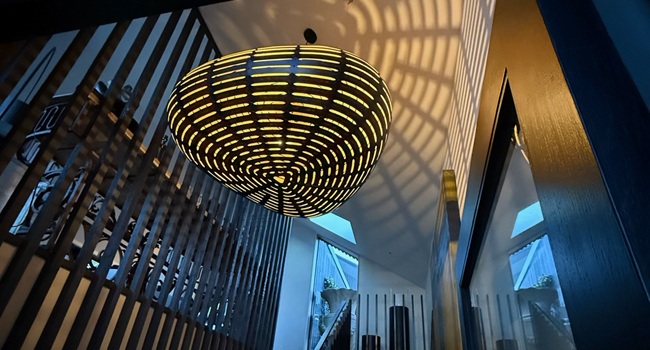
The five key considerations when selecting feature lighting for large spaces
Designing lighting for large spaces with high ceilings—such as stairwells, atriums, and entry voids can be a challenge. It requires a careful balance of scale, proportion, and visual impact. The best solution is a lighting installation that offers both practical illumination and makes a strong architectural statement. Selecting and placing these light fittings optimally ensures that the space feels cohesive rather than cavernous.
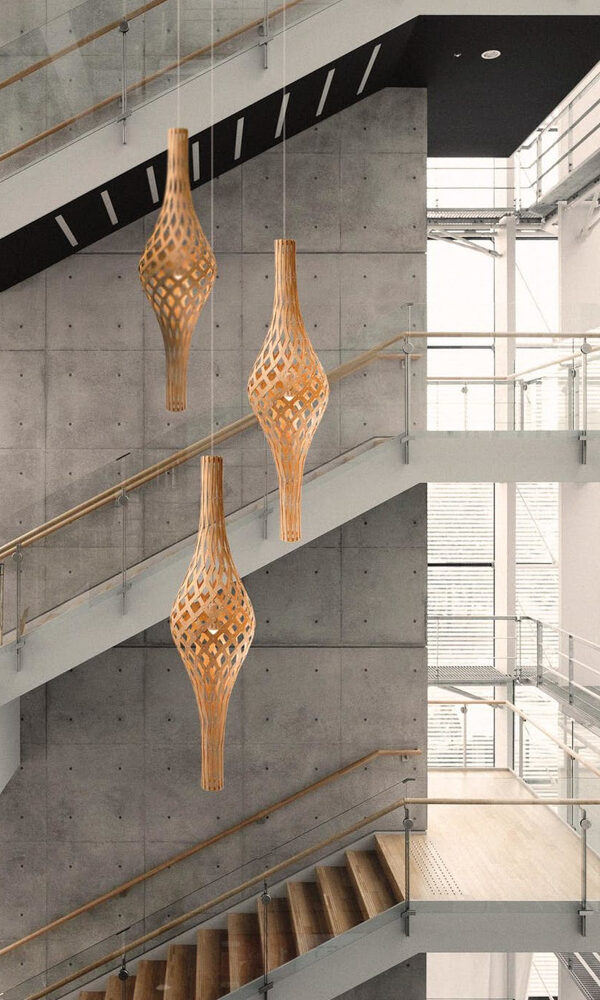
Nikau pendant lights by David Trubridge
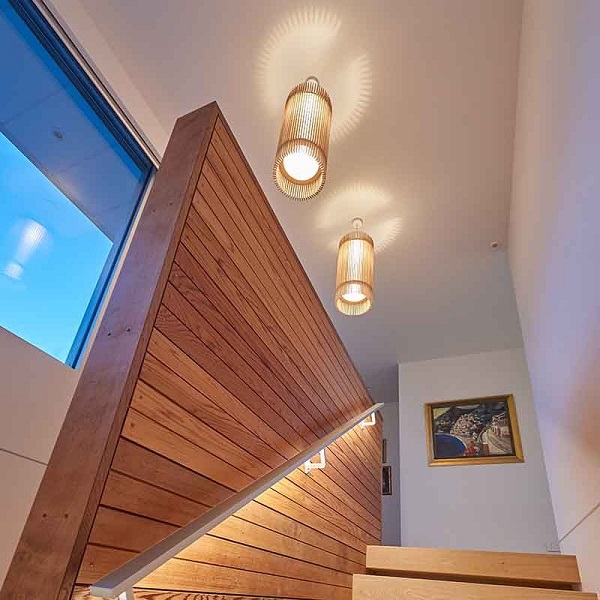
iO Tall shades by Maker Design Studio
1/ SCALE
The first consideration is scale. In expansive vertical spaces, small or undersized fittings can appear lost and ineffective. You could opt for one large hanging light, but as the selection of really large lights in the market is limited you may prefer to consider grouping a set of smaller pendant lights in the space instead. Clustered hanging lights, are ideal for filling vertical volume and can be placed to suit the available space. Designs incorporating multiple light sources or layered forms help create a sense of presence without overwhelming the space.
When choosing a fixture, consider both the height and width of the void; Larger diametres and longer suspension lengths generally work best in atriums and stairwells. As a rough guide, tall slim shapes like the Nikau by David Trubridge, or the iO Tall by Maker Design will engage with the height of the space, whereas a flatter shape such as a large Kina or Flax (David Trubridge), iO Phoebus or the Light of Ray (by Malcolm Taylor) creates more of a ‘ceiling’ dividing the upper and lower sections of the space. This ceiling can add a more human scale in a particularly large void.
2/ PLACEMENT
Placement is equally critical. In stairwells, feature lights should be positioned so they visually anchor the vertical journey. A cascading pendant that follows the line of the stairs can enhance movement and draw the eye upward or downward. In atriums, a centrally placed statement light often works best, acting as a focal point visible from multiple levels. However, in irregular layouts, offset positioning or multiple pendants arranged in a cluster can create a more dynamic effect. It can also be important to consider how the lights may be framed when viewed through the windows at night.
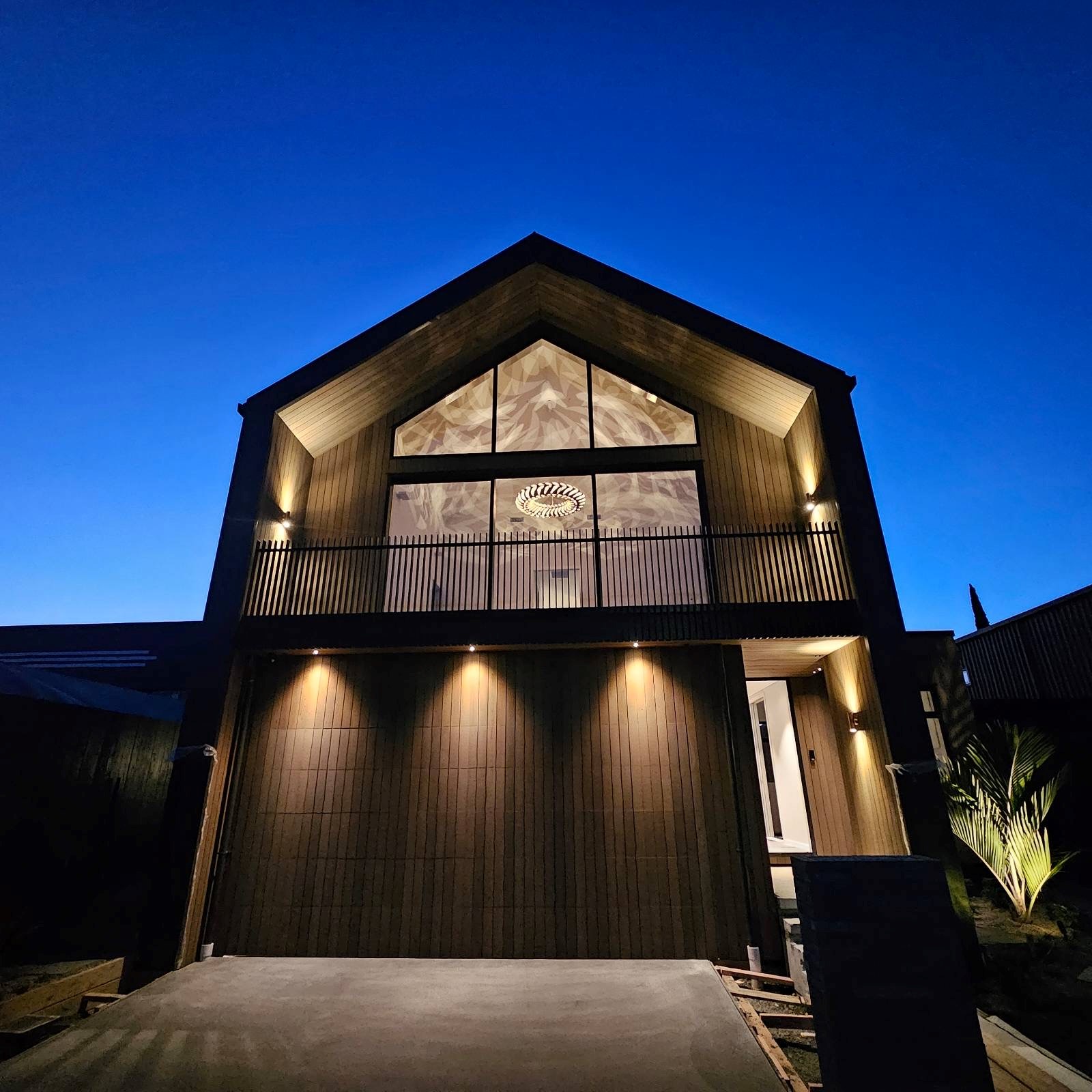
The Maru light viewed from outside
3/ HANGING HEIGHT
The hanging height must strike a balance between drama and practicality. In two- or three-story voids, suspending lights at varying heights can create layered visual interest. The lowest point should remain clear of circulation paths, while still descending far enough to engage occupants at eye level from upper floors. Lights positioned directly over stairs require a little extra headroom because of the accumulating height from climbing the steps (i.e. A hanging height of 2.4m above the bottom step may place the bottom of the light very close when you’re 5 steps up…). You should allow at least 2.2m up to the bottom of the light so that taller people don’t feel crowded – Even higher is better.
4/ LIGHTOUTPUT & AMBIENCE
Another essential factor is light output and ambience. Large spaces demand sufficient illumination, but harsh brightness can detract from comfort. Opt for warm, diffused light sources
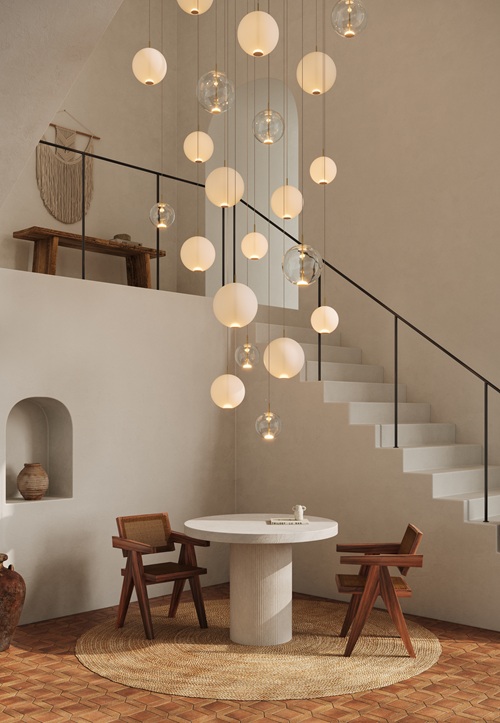
A Cluster of Orb Air pendants
or fittings with opal glass, fabric, or decorative shades to soften the effect. Multi-lamp pendants can provide both ambient lighting and dramatic highlights, especially when paired with dimming controls. It may be beneficial to factor in some additional lighting from discrete wall washer or uplighters, particularly of your chosen light fitting only contains one lightbulb – Theres only so much light one lightbulb can put out!
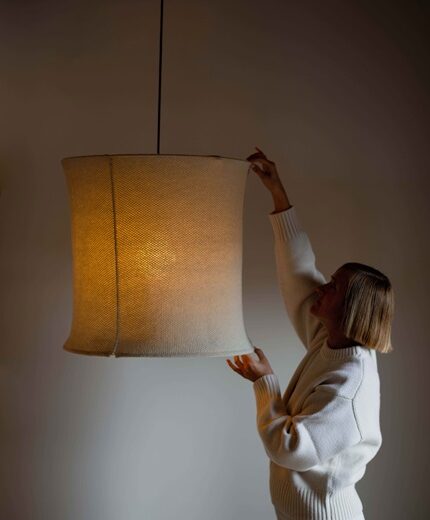
The Wool Hoop by LOF provides soft diffused illumination
5/ ARCHITECTURAL STYLE
Finally, consider the architectural style of the space. Firefly Lighting offers a range of contemporary, sculptural, and minimalist hanging lights that can complement modern interiors, while more intricate or organic forms can add character to transitional designs. The fixture should enhance the architecture by adding shape and texture rather than compete with other elements in the space.
When thoughtfully selected and positioned, large feature lights transform high-ceiling spaces into visually connected, inviting environments that feel both functional and memorable.
If you need a little guidance in selection please give us a call on 09 446 0934
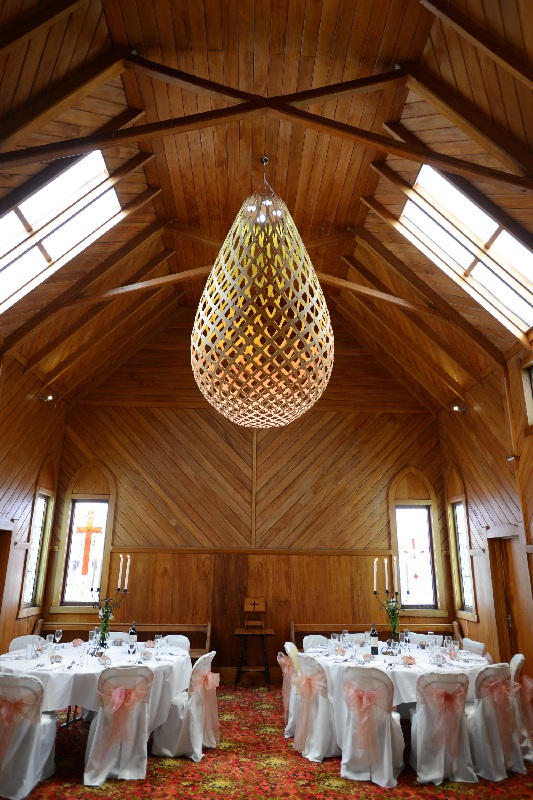
Most David Triubridge light designs are available in extra-large sizes not often advertised – Enquire for details!
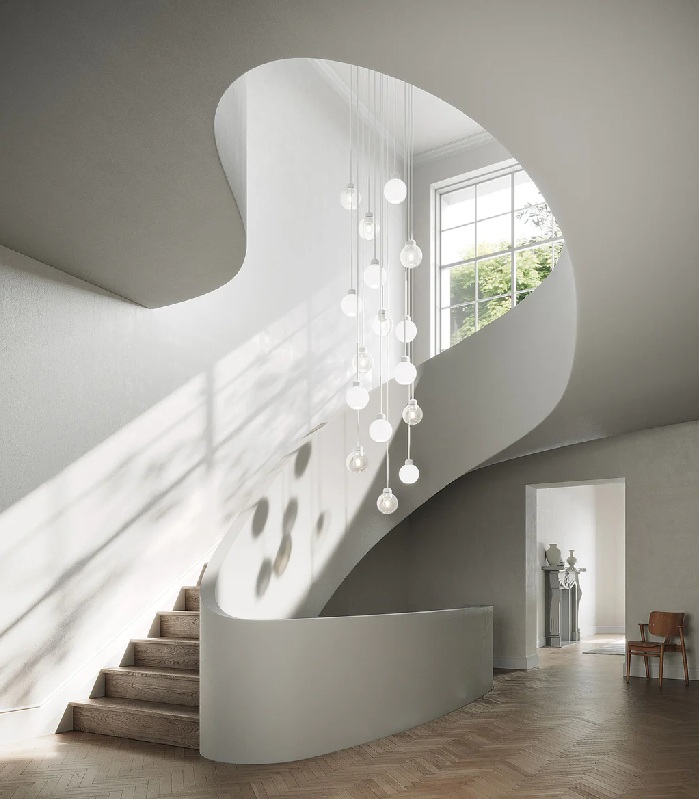
A cluster of the Parlour Lite Sphere Pendant create a focal point in this circular stairwell.